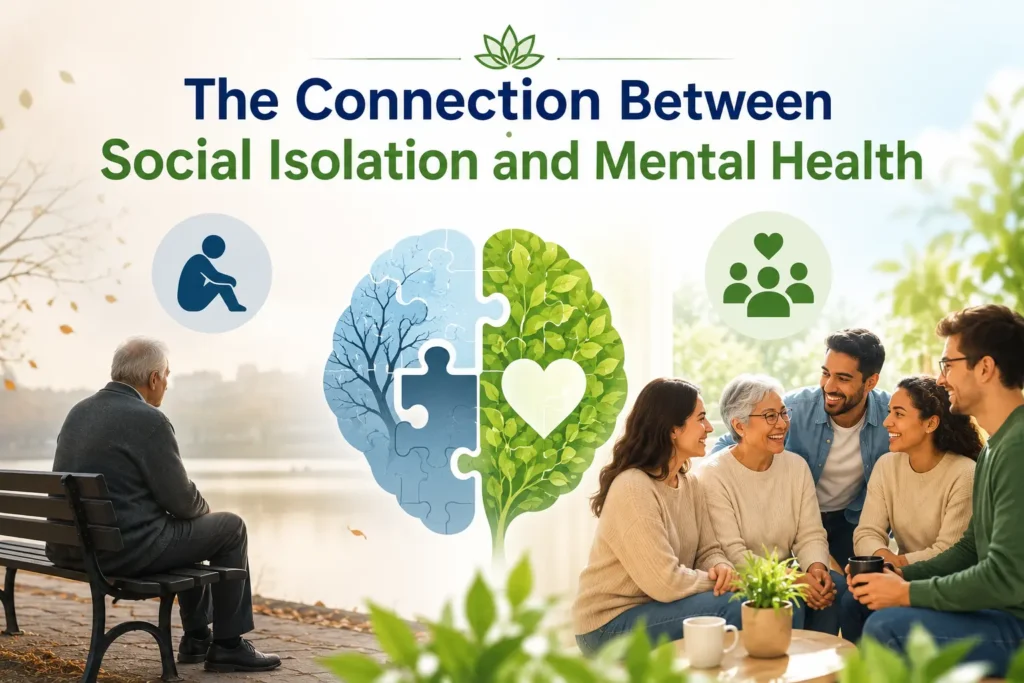
Human beings naturally depend on social interaction for emotional support, communication, and a sense of belonging. Healthy relationships and regular social engagement play an important role in maintaining mental and emotional wellbeing. However, when individuals become socially isolated for long periods, it can significantly affect their mental health and overall quality of life.
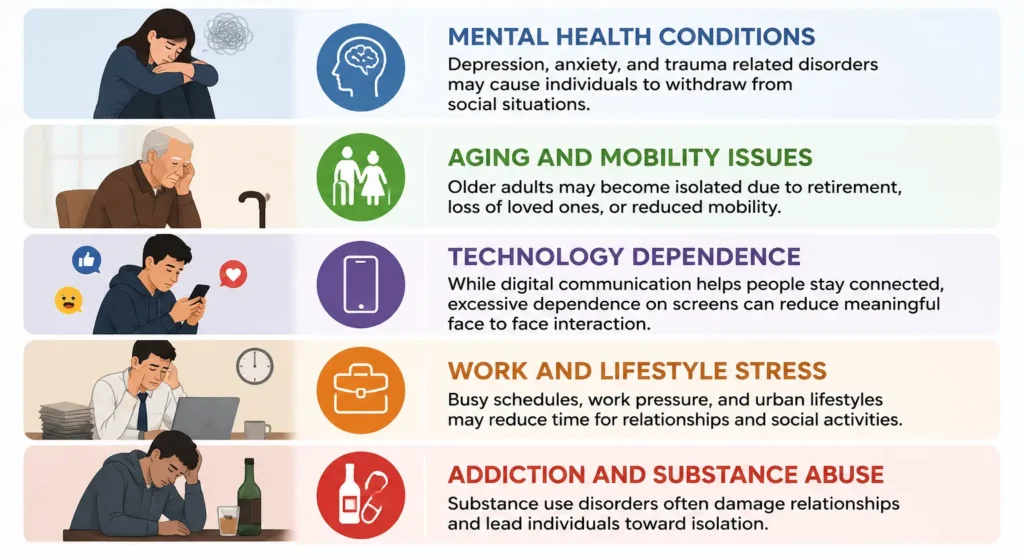
Social isolation is becoming increasingly common due to lifestyle changes, work stress, aging, technology dependence, and mental health conditions themselves. While occasional alone time can be beneficial, prolonged isolation can lead to emotional distress and psychological challenges.
Understanding the connection between social isolation and mental health is essential for recognizing early warning signs and taking steps toward emotional wellbeing.
What Is Social Isolation?
Social isolation occurs when a person has limited social contact or lacks meaningful relationships and interactions. It involves reduced communication with family, friends, coworkers, or the community.
Social isolation is different from loneliness, although the two are closely connected. A person can feel lonely even when surrounded by people, while someone living alone may not necessarily feel isolated if they maintain strong emotional connections.
When social interaction becomes consistently limited, emotional and mental health may gradually begin to suffer.
How Social Isolation Affects Mental Health
Mental health and social connection are deeply interconnected. Positive social interaction helps regulate emotions, reduce stress, and provide emotional reassurance. Without these connections, individuals may experience increased emotional vulnerability.
Increased Risk of Depression
One of the strongest effects of social isolation is depression. Limited interaction often leads to feelings of emptiness, sadness, and hopelessness. Without emotional support or meaningful conversations, individuals may struggle to manage difficult emotions.
Over time, isolation can reduce motivation and interest in daily activities, which are common symptoms of depression.
Anxiety and Overthinking
People who spend long periods isolated may experience heightened anxiety. Lack of social interaction can increase overthinking, self doubt, and fear of judgment.
Some individuals begin avoiding social situations altogether, which may gradually contribute to social anxiety disorder.
Stress and Emotional Instability
Human interaction naturally helps people process emotions and manage stress. Without emotional outlets, stress levels may increase significantly.
Social isolation can make individuals more emotionally sensitive, irritable, or overwhelmed by small challenges.
Cognitive Decline
Research suggests that long term isolation may negatively affect cognitive function, especially in older adults. Reduced mental stimulation from conversations and activities can impact memory, concentration, and problem solving abilities.
Social engagement plays an important role in keeping the brain active and mentally stimulated.
Physical Effects of Social Isolation
Mental and physical health are closely linked. Chronic isolation can affect the body in several ways.
Individuals experiencing social isolation may develop:
- Poor sleep patterns
- Fatigue and low energy
- Increased stress hormone levels
- Weakened immunity
- Reduced physical activity
Long term emotional stress may also increase the risk of chronic health conditions such as heart disease and high blood pressure.
Common Causes of Social Isolation
Importance of Social Connection
Healthy social relationships provide emotional comfort, encouragement, and stability. Talking to trusted people helps individuals process emotions and feel supported during difficult times.
Social interaction also promotes confidence, emotional resilience, and a stronger sense of identity. Participating in group activities, hobbies, or community events can significantly improve mental wellbeing.
Even small social interactions can make a positive difference.
Ways to Reduce Social Isolation
Reducing isolation often requires small but consistent efforts.
Stay Connected with Family and Friends
Regular phone calls, messages, or in person visits help maintain emotional bonds.
Participate in Activities
Joining support groups, hobby classes, or community activities encourages meaningful interaction.
Seek Professional Support
Mental health professionals can help individuals manage anxiety, depression, or emotional barriers contributing to isolation.
Maintain a Routine
Structured daily routines encourage activity and reduce emotional withdrawal.
Limit Excessive Screen Time
Balancing digital communication with real world interaction supports healthier relationships.
Role of Mental Health Support
Sometimes social isolation becomes difficult to overcome without professional help. Therapy and counseling provide emotional support, coping strategies, and guidance for rebuilding confidence and social engagement.
Mental health professionals help individuals identify the root causes of isolation and create healthier behavioral patterns.
Final Thoughts
Social isolation can have a powerful impact on mental health, affecting emotions, behavior, and overall wellbeing. While occasional solitude is normal, prolonged isolation can increase the risk of depression, anxiety, and emotional distress.
Maintaining meaningful social connections is essential for emotional balance and healthy living. Seeking support, staying socially engaged, and addressing mental health concerns early can significantly improve quality of life and long term wellbeing.