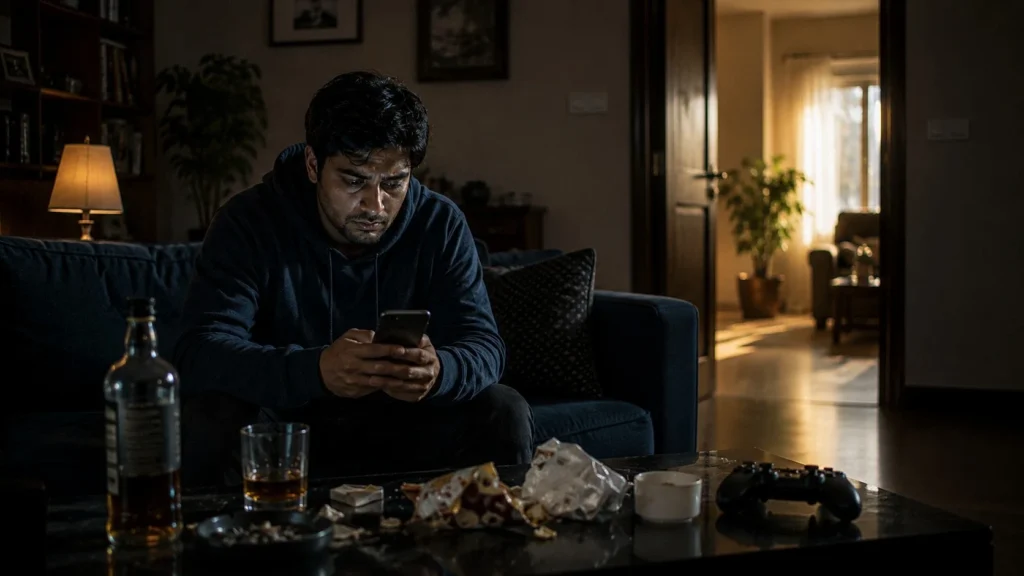
Talk to almost anyone who’s walked into a rehab centre for the first time, and they’ll tell you the hardest part wasn’t the treatment itself; it was making the decision to go. Long before someone reaches out for help, they’ve usually spent months, sometimes years, believing things about addiction and recovery that simply aren’t true.
These myths don’t just create confusion. They cost time, relationships, and in some cases, lives. So let’s take a closer look at the ones that come up most often, and why they don’t hold up.
Myth 1: "I Can Quit on My Own Whenever I Want"
This is probably the most common one, and it’s rooted in willpower being seen as the only thing standing between someone and sobriety. In reality, addiction changes how the brain processes reward, stress, and decision-making. That’s not a character flaw; it’s a medical condition, and it responds to medical and psychological treatment the same way other chronic conditions do. Trying to detox alone, especially from alcohol or certain drugs, can also be physically dangerous without proper supervision, since withdrawal symptoms can escalate quickly and unpredictably.
Myth 2: "Rehab Is Only for 'Rock Bottom' Cases"
Many people wait until a crisis forces their hand- a health scare, a lost job, a broken relationship- before considering treatment. But addiction exists on a spectrum, and early intervention almost always leads to better outcomes. You don’t need to lose everything to justify getting help.
Myth 3: "Treatment Means Being Locked Away for Months"
The image of a rehab centre as a strict, isolating institution keeps a lot of people from even inquiring. Modern treatment looks very different. Programs are typically personalized, time-bound, and built around therapy, medical care, and gradual reintegration, not punishment. Family involvement, counselling, and aftercare planning are usually part of the process from day one, and most centres today aim to feel more like a place of care than a place of confinement.
Myth 4: "Once an Addict, Always an Addict"
This belief can be quietly devastating, because it suggests recovery is pointless. Relapse is a known part of many recovery journeys, not proof that treatment failed. Long-term recovery is realistic and common when treatment is followed by consistent aftercare and support.
Myth 5: "Seeking Help Means Admitting Weakness"
Stigma is still one of the biggest barriers to treatment, especially in communities where mental health and addiction aren’t openly discussed. Asking for help takes more courage than avoiding the problem does. It’s an act of responsibility, not defeat.
Why These Myths Persist?
A few reasons these ideas stick around:
- Addiction is rarely talked about openly, so misinformation fills the gap
- Pop culture often portrays recovery as either a miracle cure or a hopeless cycle, with nothing in between
- Families sometimes protect loved ones from judgment by staying silent, which unintentionally reinforces stigma
- Fear of cost or fear of the unknown makes people avoid researching real options altogether
A Quick Reality Check
Before writing off treatment because of something you’ve heard, it helps to ask a few honest questions:
- Am I avoiding help because of the actual facts, or because of what I assume treatment looks like?
- Would I encourage a friend in this situation to wait, or to get evaluated?
- Has this pattern affected my health, work, or relationships in the last year?
- Do I actually know what a treatment program involves, or am I picturing something outdated?
If even one of those questions gives you pause, it’s worth having a real conversation with a professional, not a search engine, not a well-meaning relative, but someone qualified to assess the situation.
What Actually Helps?
Recovery isn’t a single event; it’s a process that usually works best with structure and support around it. Good treatment typically includes:
- A proper medical and psychological assessment before anything else
- Supervised detox where necessary, to manage withdrawal safely
- Therapy- individual and group to address underlying causes, not just symptoms
- A realistic aftercare plan, since the weeks after treatment matter as much as the treatment itself
None of this requires someone to hit an extreme low point first. It just requires an honest look at where things stand.
Taking the First Step
If you or someone you love has been putting off getting help because of one of these myths, that hesitation is worth questioning. At Sunshine Wellness Centre, we work with individuals and families to build treatment plans that are medically sound, compassionate, and realistic, not one-size-fits-all. Our team includes experienced psychiatrists and counsellors who understand that every recovery story looks a little different.
If you’re unsure where to start, a conversation costs nothing and commits you to nothing. Reach out to Sunshine Wellness Centre to talk through your options, ask questions, and get a clearer, judgment-free picture of what recovery could actually look like.
About The Author