
As people grow older, occasional forgetfulness is a common part of aging. Misplacing keys, forgetting where glasses were kept, or struggling to remember someone’s name for a short time are experiences many older adults encounter. These minor lapses usually do not interfere with daily life and are considered a normal part of the aging process.
However, memory loss that becomes frequent, worsens over time, or begins affecting everyday activities may be a sign of an underlying medical condition. In some cases, it can indicate cognitive disorders such as dementia or Alzheimer’s disease. Recognizing the difference between normal age related forgetfulness and concerning memory loss is essential because early diagnosis and treatment can improve quality of life and help families plan appropriate care.
What Is Normal Age Related Memory Loss?
As the brain ages, it naturally processes information more slowly than before. This means it may take longer to recall names, appointments, or certain details. Normal age related memory changes are generally mild and do not prevent a person from living independently.
For example, an older adult may occasionally forget where they placed their wallet but eventually remember after retracing their steps. They might need reminders for appointments or take longer to learn how to use a new device. These changes are generally not progressive and do not significantly disrupt daily routines.
The ability to make decisions, communicate effectively, and perform familiar tasks usually remains intact.
When Should Memory Loss Be a Concern?
Memory problems become concerning when they occur frequently, worsen over time, or interfere with everyday functioning. Individuals may repeatedly forget recently learned information, ask the same questions several times, or struggle to complete tasks they once handled with ease.
Unlike normal forgetfulness, these symptoms often affect independence and can create difficulties in managing finances, medications, household responsibilities, or personal care.
Persistent cognitive decline should always be evaluated by a healthcare professional.
Warning Signs That Memory Loss May Be More Than Normal Aging
Certain symptoms may indicate that memory loss is related to a neurological condition rather than normal aging.
Frequently Forgetting Recent Events
One of the earliest warning signs is difficulty remembering recently learned information. Individuals may forget conversations, appointments, or events that occurred only a short time earlier.
Repeating Questions or Stories
Repeatedly asking the same questions or telling the same stories without remembering previous conversations can indicate impaired short term memory.
Difficulty Performing Familiar Tasks
Tasks that were once routine, such as preparing meals, operating household appliances, or managing finances, may become increasingly difficult.
Getting Lost in Familiar Places
Confusion while driving or walking in familiar neighborhoods should not be dismissed as normal aging.
Problems with Language
Individuals may struggle to find common words, follow conversations, or understand instructions.
Poor Judgment
Changes in decision making, financial management, or personal hygiene may signal declining cognitive function.
Misplacing Items Frequently
Occasionally losing belongings is common, but consistently placing items in unusual locations and being unable to retrace steps may be concerning.
Personality or Behavioral Changes
Memory disorders can also affect mood and behavior. Individuals may become withdrawn, suspicious, anxious, or unusually irritable.
Possible Causes of Significant Memory Loss
Memory loss can result from several medical conditions, not all of which are permanent.
Some possible causes include:
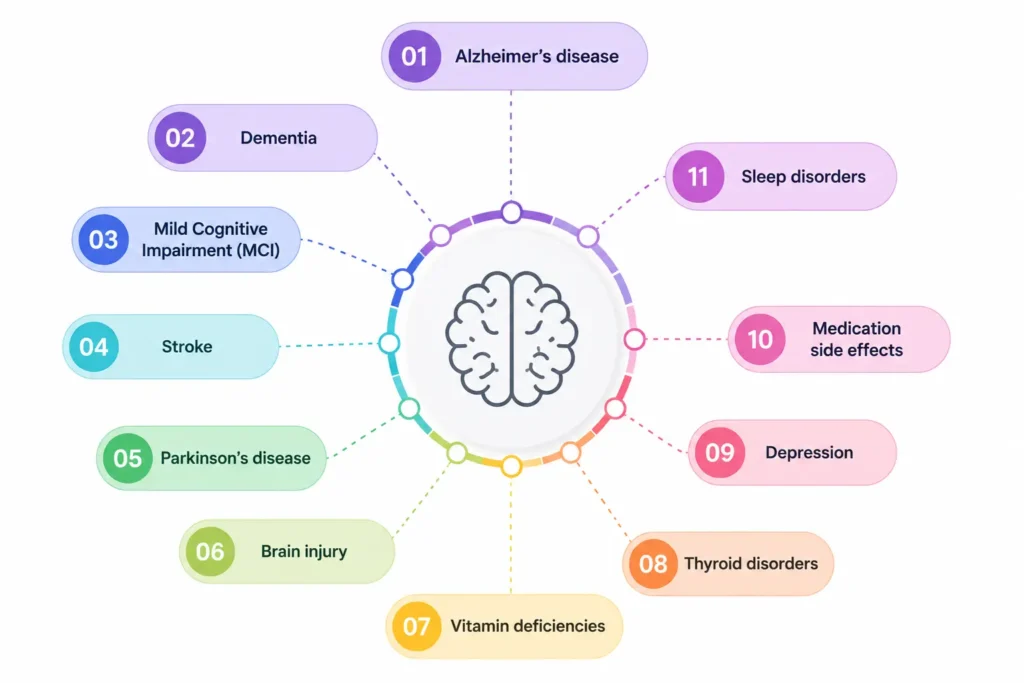
Because some of these conditions are treatable, medical evaluation is essential whenever memory problems become persistent.
Understanding Mild Cognitive Impairment (MCI)
Mild Cognitive Impairment is a condition in which an individual experiences noticeable memory or thinking problems that are greater than expected for their age but not severe enough to significantly interfere with daily life.
Some individuals with MCI remain stable for years, while others may eventually develop dementia. Regular medical monitoring helps track changes and guide treatment when necessary.
Alzheimer’s Disease and Dementia
Although the terms are often used interchangeably, Alzheimer’s disease and dementia are not the same.
Dementia is a general term describing a decline in memory, reasoning, language, and daily functioning caused by various neurological conditions.
Alzheimer’s disease is the most common cause of dementia. It is a progressive brain disorder that gradually damages memory, thinking abilities, and behavior.
Early diagnosis allows families to access treatment, support services, and care planning sooner.
How Memory Loss Affects Daily Life
Progressive memory problems can affect nearly every aspect of daily living.
Individuals may struggle to remember appointments, manage medications, pay bills, or follow conversations. As cognitive decline progresses, maintaining independence becomes increasingly difficult.
Family members often notice changes before the individual does, making their observations valuable during medical evaluations.
How Memory Problems Are Diagnosed
Doctors use a combination of medical history, physical examination, cognitive assessments, and sometimes brain imaging to determine the cause of memory loss.
Additional blood tests may be performed to identify treatable medical conditions such as vitamin deficiencies or thyroid disorders.
An accurate diagnosis is essential because treatment recommendations vary depending on the underlying cause.
Treatment and Management
Treatment depends on the specific diagnosis.
For some conditions, medications may help slow cognitive decline or manage symptoms. Cognitive rehabilitation, memory exercises, physical activity, balanced nutrition, and social engagement also support brain health.
Creating structured daily routines and maintaining familiar surroundings can help individuals remain independent for longer.
Caregiver education is equally important, as families often play a central role in supporting individuals with memory disorders.
When to Seek Professional Help
Professional evaluation is recommended if memory loss begins interfering with daily activities, communication, safety, or decision making.
Families should also seek medical advice if they notice sudden personality changes, frequent confusion, or repeated episodes of getting lost.
Early diagnosis provides the best opportunity for treatment, planning, and ongoing support.
Final Thoughts
Occasional forgetfulness is a normal part of aging, but persistent or worsening memory loss should never be ignored. Understanding the difference between normal age related changes and symptoms of cognitive disorders allows individuals and families to seek help at the right time.
With early diagnosis, appropriate treatment, and compassionate support, many people living with memory disorders can maintain their independence and quality of life for as long as possible.
Frequently Asked Questions
Is forgetting names a normal part of aging?
Yes. Occasionally forgetting names or misplacing everyday items is common with aging, especially if the information is remembered later.
What is the difference between normal memory loss and dementia?
Normal memory changes are mild and do not interfere with daily life. Dementia causes progressive memory decline that affects communication, reasoning, and the ability to perform everyday tasks.
Can memory loss be treated?
Some causes of memory loss, such as vitamin deficiencies, medication side effects, or thyroid disorders, may be treatable. Early medical evaluation is important to identify the underlying cause.
When should I be concerned about memory loss?
You should seek professional advice if memory problems become frequent, worsen over time, or begin affecting daily activities, relationships, or personal safety.
Can lifestyle changes help protect brain health?
Yes. Regular exercise, a balanced diet, quality sleep, social interaction, and mentally stimulating activities can support cognitive health and may help reduce the risk of cognitive decline.
About The Author