
Depression is one of the most common mental health conditions worldwide, yet it often goes undiagnosed in men. While both men and women can experience depression, the symptoms may appear differently, making them harder to recognize. Many men may not openly express sadness or emotional distress. Instead, they may display anger, irritability, risk-taking behavior, or physical complaints, which can mask the underlying condition.
Social expectations, stigma, and misconceptions about mental health often prevent men from acknowledging their struggles or seeking professional help. As a result, depression may remain untreated, affecting relationships, careers, physical health, and overall quality of life.
Understanding the unique signs of depression in men is the first step toward early diagnosis, effective treatment, and long-term recovery.
What Is Depression?
Depression is more than simply feeling sad or having a bad day. It is a medical condition that affects a person’s thoughts, emotions, physical health, and daily functioning. Symptoms usually persist for at least two weeks and interfere with work, relationships, and everyday activities.
Depression can affect people of any age and background. It is not a sign of weakness or lack of willpower but a treatable mental health disorder that requires appropriate care and support.
Why Depression in Men Often Goes Unnoticed
Many men are raised to believe they should always appear strong, independent, and emotionally resilient. Because of these societal expectations, they may suppress emotional pain or avoid discussing their feelings.
Instead of expressing sadness, men often channel emotional distress into behaviors such as overworking, substance use, aggression, or social withdrawal. These behaviors may be misunderstood as stress, personality changes, or temporary mood swings rather than symptoms of depression.
Additionally, men are generally less likely than women to seek mental health support, allowing symptoms to worsen over time.
Common Signs of Depression in Men
Depression affects each person differently, but there are several warning signs that families and friends should recognize.
Persistent Irritability or Anger
Rather than appearing sad, many men become easily frustrated or angry. Small inconveniences may trigger disproportionate emotional reactions, and irritability may become more frequent.
Loss of Interest in Activities
Men experiencing depression often lose interest in hobbies, sports, work, or social activities they once enjoyed. They may withdraw from family and friends without offering an explanation.
Constant Fatigue
Feeling physically exhausted despite getting enough rest is a common symptom. Everyday tasks may feel overwhelming, and energy levels often remain consistently low.
Difficulty Concentrating
Depression can make it difficult to focus, remember information, or make decisions. This may affect workplace performance and daily responsibilities.
Changes in Sleep Patterns
Some men struggle with insomnia, while others sleep excessively but still wake up feeling tired. Poor sleep often worsens other symptoms of depression.
Appetite and Weight Changes
Depression may lead to eating significantly more or less than usual, resulting in noticeable weight gain or weight loss.
Increased Risk Taking
Some men cope with emotional distress by engaging in risky behaviors such as reckless driving, gambling, excessive alcohol consumption, or substance misuse.
Physical Symptoms
Depression may also present as headaches, digestive problems, muscle pain, or unexplained body aches without a clear medical cause.
Risk Factors for Depression in Men
Several factors may increase the likelihood of developing depression.
Common risk factors include:
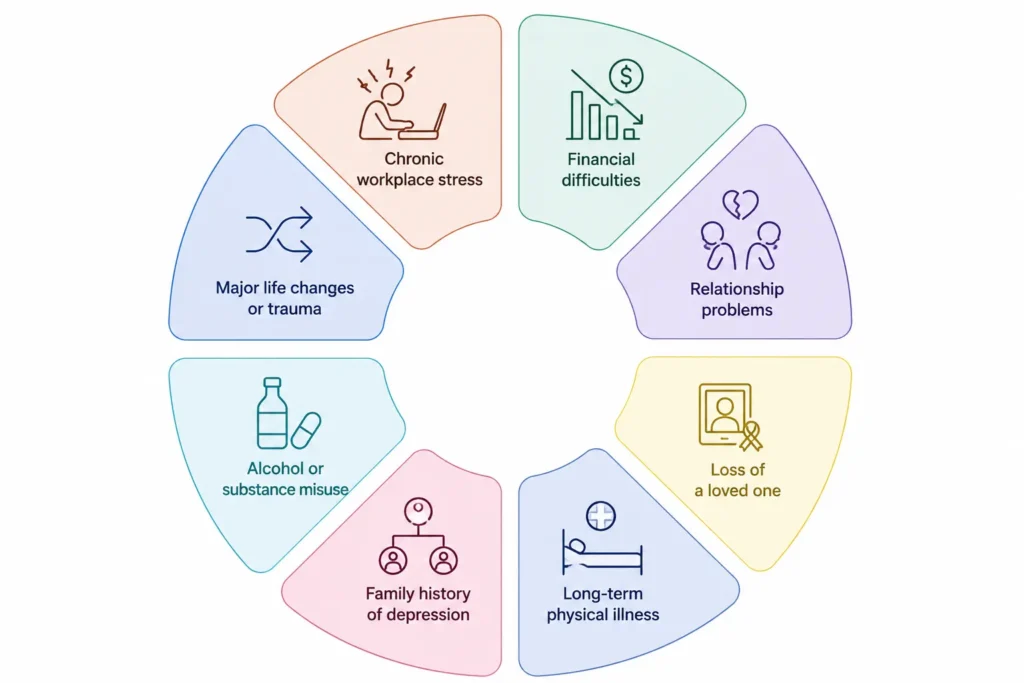
Experiencing one or more of these factors does not necessarily lead to depression, but they may increase vulnerability.
Emotional Symptoms That Are Often Hidden
Many men find it difficult to express emotional pain openly.
Hidden emotional symptoms may include:
- Feelings of hopelessness
- Low self-esteem
- Guilt or worthlessness
- Loss of motivation
- Feeling emotionally numb
- Persistent worry or anxiety
These emotions are often internalized, making them difficult for others to recognize.
How Depression Can Affect Daily Life
Untreated depression can impact every aspect of a man’s life.
Workplace Performance
Reduced concentration, low motivation, and fatigue may affect productivity and career progression.
Relationships
Depression often creates communication difficulties, emotional distance, and misunderstandings with partners, children, and friends.
Physical Health
Chronic depression has been associated with increased risks of heart disease, high blood pressure, weakened immunity, and sleep disorders.
Substance Abuse
Some men attempt to cope by using alcohol or drugs, which may temporarily mask symptoms but often worsen depression over time.
When Should You Seek Professional Help?
Professional support should be considered if symptoms persist for more than two weeks or begin interfering with work, relationships, or daily activities.
Seeking help is particularly important if depression is accompanied by severe anxiety, substance misuse, or thoughts of self-harm.
Early intervention can significantly improve recovery outcomes and prevent symptoms from becoming more severe.
Treatment Options for Depression
Depression is highly treatable, and treatment plans are tailored to individual needs.
Common treatment approaches include:

Supporting Men with Depression
Family members, friends, and colleagues play an important role in encouraging recovery.
Listening without judgment, encouraging professional evaluation, and offering emotional support can make it easier for someone to seek help. Avoid dismissing symptoms or encouraging individuals to simply “stay strong,” as this may reinforce stigma and discourage treatment.
Creating a safe and supportive environment helps individuals feel understood and more willing to discuss their mental health.
Final Thoughts
Depression in men often goes unnoticed because symptoms may appear differently than expected. Instead of sadness, many men experience irritability, fatigue, anger, social withdrawal, or physical complaints. These subtle signs can delay diagnosis and treatment, allowing the condition to affect every area of life.
Recognizing these warning signs and seeking professional support early can lead to effective treatment and lasting recovery. Mental health is an essential part of overall wellbeing, and asking for help is a sign of strength, not weakness.
Frequently Asked Questions
Why is depression harder to recognize in men?
Men often express depression through irritability, anger, physical symptoms, or withdrawal rather than openly discussing sadness, making it more difficult to identify.
What are the early signs of depression in men?
Common early signs include fatigue, loss of interest in activities, difficulty concentrating, sleep problems, irritability, and social withdrawal.
Can depression cause physical symptoms?
Yes. Depression can contribute to headaches, digestive issues, muscle pain, fatigue, and other unexplained physical symptoms.
How is depression in men treated?
Treatment may include psychotherapy, medication when appropriate, lifestyle changes, and ongoing emotional support based on the individual’s needs.
When should someone seek professional help for depression?
If symptoms last for more than two weeks or interfere with work, relationships, or daily life, it is important to consult a qualified mental health professional.
About The Author