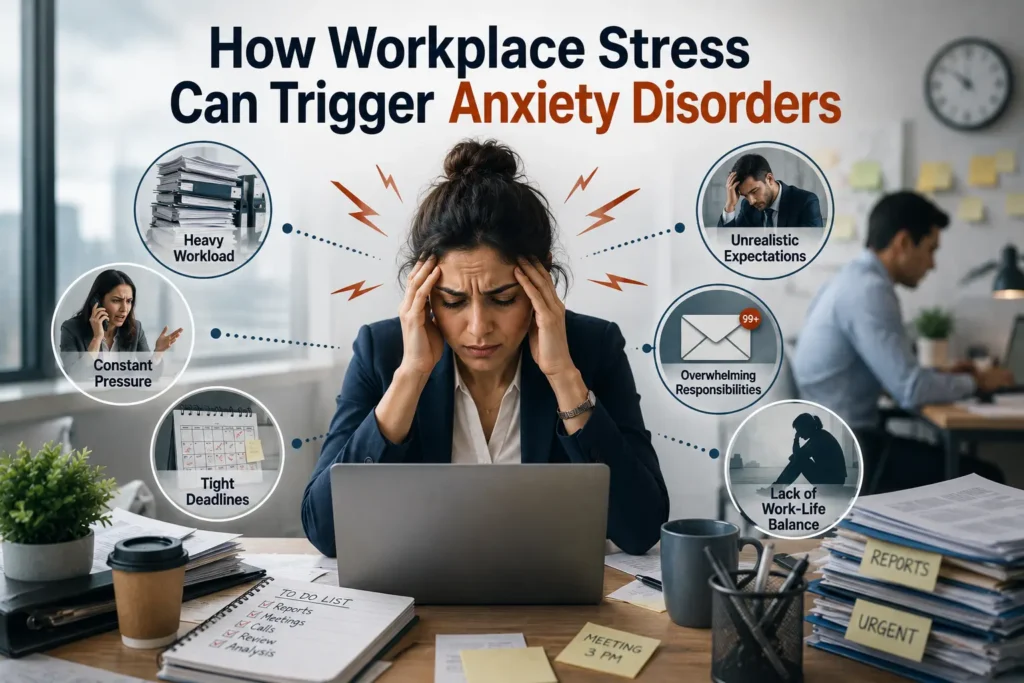
Workplace stress has become an increasingly common part of modern life. Tight deadlines, demanding workloads, long working hours, and constant pressure to perform can take a significant toll on an individual’s mental health. While occasional stress is a normal response to challenging situations, chronic workplace stress can have serious consequences when left unmanaged.
One of the most significant mental health concerns linked to prolonged workplace stress is anxiety. When stress becomes persistent and overwhelming, it can trigger anxiety disorders that affect both personal and professional life. Understanding this connection is essential for recognizing warning signs early and seeking appropriate support.
What Is Workplace Stress?
Workplace stress occurs when job demands exceed an individual’s ability to cope effectively. It can arise from various factors, including excessive workload, lack of control over responsibilities, unrealistic expectations, interpersonal conflicts, or job insecurity.
A certain level of pressure can sometimes improve motivation and productivity. However, when stress becomes constant and unmanageable, it can negatively affect emotional wellbeing, physical health, and overall quality of life.
Understanding Anxiety Disorders
Anxiety is a natural emotional response to uncertainty or perceived threats. However, anxiety disorders involve excessive fear, worry, or nervousness that persists beyond normal situations and interferes with daily functioning.
Common anxiety disorders include:
- Generalized Anxiety Disorder (GAD)
- Panic Disorder
- Social Anxiety Disorder
- Specific Phobias
- Health Anxiety
These conditions can affect concentration, decision making, relationships, and work performance.
How Workplace Stress Leads to Anxiety
The human body is designed to handle short periods of stress through the “fight or flight” response. During stressful situations, hormones such as cortisol and adrenaline are released to help the body respond to challenges.
When workplace stress continues for weeks, months, or years, the body’s stress response remains activated for extended periods. This can lead to emotional exhaustion, increased worry, and heightened sensitivity to stressors.
Over time, chronic stress can contribute to the development of anxiety disorders, especially in individuals who may already have a genetic or psychological predisposition.
Common Workplace Factors That Trigger Anxiety
Several workplace conditions can contribute to chronic stress and increase anxiety risk.
Excessive Workload
Constant deadlines, unrealistic targets, and large volumes of work can create feelings of overwhelm. Employees may feel they can never fully catch up, leading to ongoing worry and tension.
Lack of Work-Life Balance
When work responsibilities begin to dominate personal time, individuals may struggle to rest and recover. Constant connectivity through emails and digital communication can make it difficult to switch off mentally.
Job Insecurity
Fear of losing employment, organizational restructuring, or uncertainty about career progression can create significant anxiety.
Workplace Conflict
Difficult relationships with supervisors, colleagues, or clients can generate emotional stress and increase feelings of nervousness and frustration.
High Performance Pressure
Jobs that require constant achievement, competition, or public evaluation may contribute to chronic stress and self doubt.
Lack of Control
Feeling powerless over work decisions, schedules, or responsibilities can increase stress levels and contribute to anxiety symptoms.
Signs That Workplace Stress Is Affecting Mental Health
Recognizing early warning signs can help prevent workplace stress from developing into a more serious anxiety disorder.
Common symptoms include:
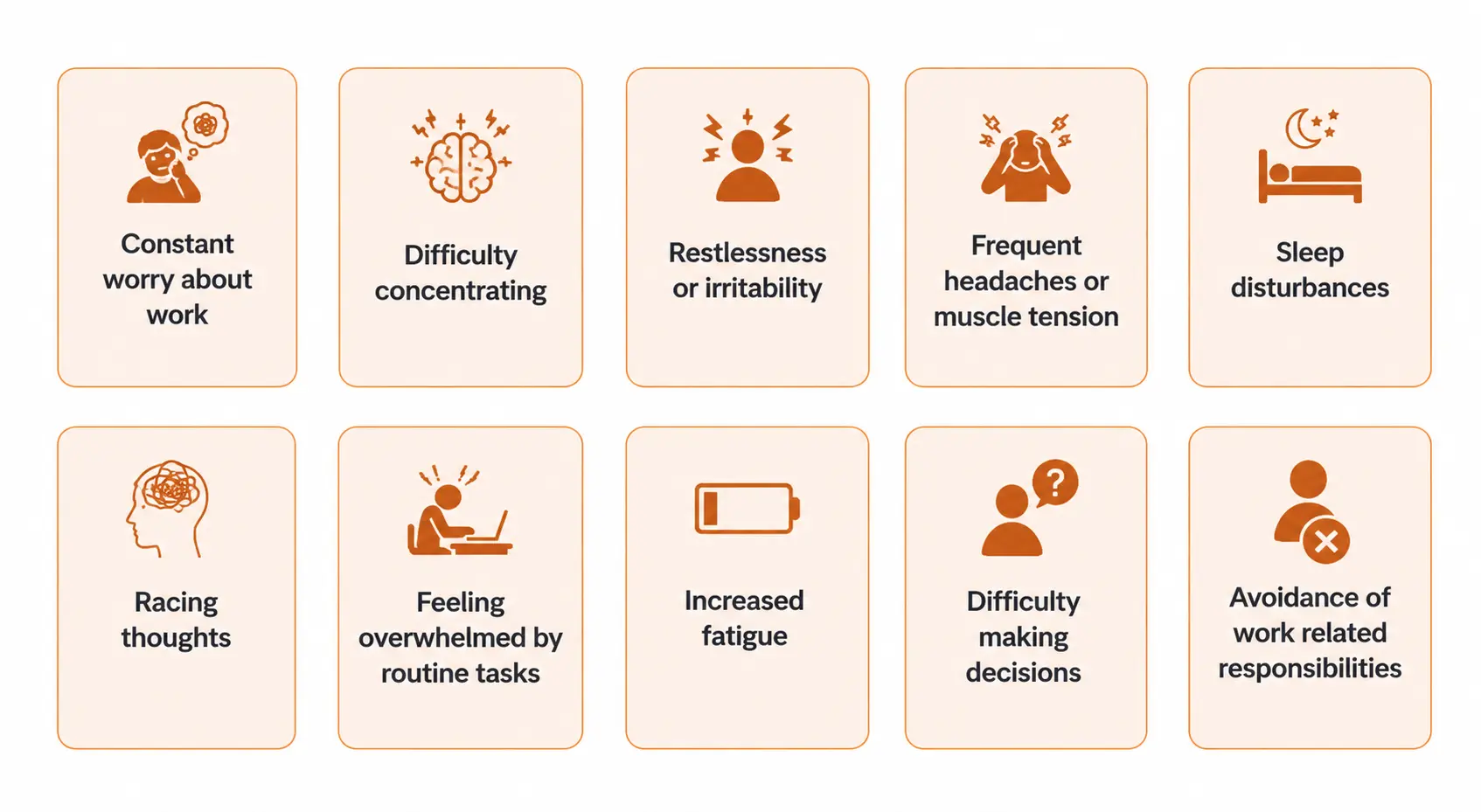
These symptoms may gradually worsen if the underlying stress remains unaddressed.
Physical Effects of Workplace Anxiety
Anxiety affects more than just emotions. It can also have a significant impact on physical health.
Individuals experiencing workplace anxiety may develop:
- Increased heart rate
- Digestive problems
- Frequent headaches
- Muscle pain and tension
- Fatigue
- Changes in appetite
- Weakened immune function
Long term stress and anxiety can increase the risk of chronic health conditions if left untreated.
Impact on Professional Performance
Ironically, the stress people experience while trying to perform well at work can eventually reduce productivity.
Anxiety can impair concentration, memory, and decision making. Individuals may struggle to complete tasks efficiently or become overly focused on avoiding mistakes. Some employees may begin missing deadlines, avoiding responsibilities, or withdrawing from workplace interactions.
Over time, anxiety can negatively affect job satisfaction and career growth.
Strategies to Manage Workplace Stress
Although workplace stress cannot always be eliminated, there are several effective ways to reduce its impact.
Set Realistic Boundaries
Maintaining clear boundaries between work and personal life helps prevent burnout. Avoid checking work emails during personal time whenever possible.
Prioritize Tasks
Breaking large projects into smaller, manageable tasks can reduce feelings of overwhelm and improve focus.
Practice Stress Management Techniques
Deep breathing exercises, meditation, mindfulness, and relaxation techniques can help calm the nervous system and reduce anxiety levels.
Maintain Healthy Habits
Regular exercise, balanced nutrition, and adequate sleep play an important role in managing stress and improving emotional resilience.
Seek Social Support
Talking with trusted friends, family members, or colleagues can provide emotional relief and valuable perspective.
Take Regular Breaks
Short breaks throughout the workday can improve concentration and reduce mental fatigue.
When to Seek Professional Help
If workplace stress begins interfering with daily functioning, relationships, or emotional wellbeing, professional support may be beneficial.
Mental health professionals can help individuals identify stress triggers, develop coping strategies, and address anxiety symptoms through evidence based therapies. Early intervention often prevents symptoms from becoming more severe.
Seeking help is a proactive step toward protecting mental health and maintaining overall wellbeing.
Role of Employers in Supporting Mental Health
Organizations also play an important role in reducing workplace stress. Supportive workplaces that encourage open communication, realistic expectations, work-life balance, and mental health awareness create healthier environments for employees.
Providing access to mental health resources and promoting a positive workplace culture can significantly reduce anxiety related challenges.
Final Thoughts
Workplace stress is a reality for many individuals, but it should not be ignored when it begins affecting mental health. Prolonged stress can increase the risk of anxiety disorders, impacting emotional wellbeing, physical health, and professional performance.
Recognizing the signs early, adopting healthy coping strategies, and seeking professional support when needed can make a significant difference. By prioritizing mental health and managing workplace stress effectively, individuals can maintain greater balance, productivity, and overall quality of life.
About The Author