
Recovery from addiction is not only about stopping substance use. It also involves understanding the emotional, psychological, and environmental factors that contribute to addictive behavior. One of the biggest challenges individuals face during recovery is managing cravings and addiction triggers.
Cravings can feel intense and overwhelming, especially during the early stages of recovery. Triggers can unexpectedly bring back the urge to use substances, even after long periods of progress. Understanding why cravings occur and learning how to manage triggers are essential steps toward long term recovery and emotional stability.
What Are Addiction Cravings?
Cravings are strong urges or intense desires to use a substance or engage in addictive behavior. These urges can be physical, emotional, or psychological.
Cravings occur because addiction changes the brain’s reward system. Over time, the brain becomes dependent on substances to release chemicals associated with pleasure, comfort, or stress relief. When the substance is removed, the brain may continue seeking it, leading to cravings.
Cravings can vary in intensity. Some may last only a few minutes, while others can persist for longer periods and become emotionally distressing.
What Are Addiction Triggers?
Triggers are situations, emotions, places, people, or experiences that increase the urge to use substances. Triggers activate memories associated with addiction and can lead to cravings.
Triggers are often connected to past substance use experiences. Even after treatment, exposure to certain environments or emotional states may reactivate addictive patterns.
Understanding personal triggers is an important part of relapse prevention and recovery management.
Types of Addiction Triggers
Addiction triggers generally fall into two main categories: internal triggers and external triggers.
Internal Triggers
Internal triggers are emotional or mental experiences that create the urge to use substances. These may include:
- Stress
- Anxiety
- Depression
- Loneliness
- Anger
- Guilt
- Frustration
- Boredom
Many individuals initially turn to substances as a coping mechanism for difficult emotions. During recovery, these feelings may still trigger cravings if healthier coping strategies have not yet been developed.
External Triggers
External triggers come from the environment or surroundings. Common examples include:
- Being around people associated with substance use
- Visiting places connected to past addiction
- Exposure to alcohol or drugs
- Social events or parties
- Financial stress or workplace pressure
Even certain smells, music, or routines can trigger memories related to substance use.
Why Cravings Feel So Strong
Addiction affects areas of the brain responsible for motivation, reward, and impulse control. Substances create temporary feelings of relief or pleasure, and the brain begins associating them with emotional comfort.
When cravings occur, the brain remembers those rewarding experiences and urges the person to repeat the behavior. Stress and emotional discomfort can intensify this process.
Cravings do not mean recovery is failing. They are a normal part of the healing process and often become more manageable with time and treatment.
How Cravings Affect Recovery
If cravings are not managed properly, they may increase the risk of relapse. Individuals may feel frustrated, discouraged, or emotionally overwhelmed during intense cravings.
Fear of cravings sometimes causes people to isolate themselves or avoid situations entirely. While avoiding high risk situations may be helpful initially, long term recovery also involves learning healthy coping skills.
Understanding that cravings are temporary and manageable is important for maintaining confidence during recovery.
Recognizing Early Warning Signs
Learning to recognize early warning signs helps individuals respond before cravings become overwhelming.
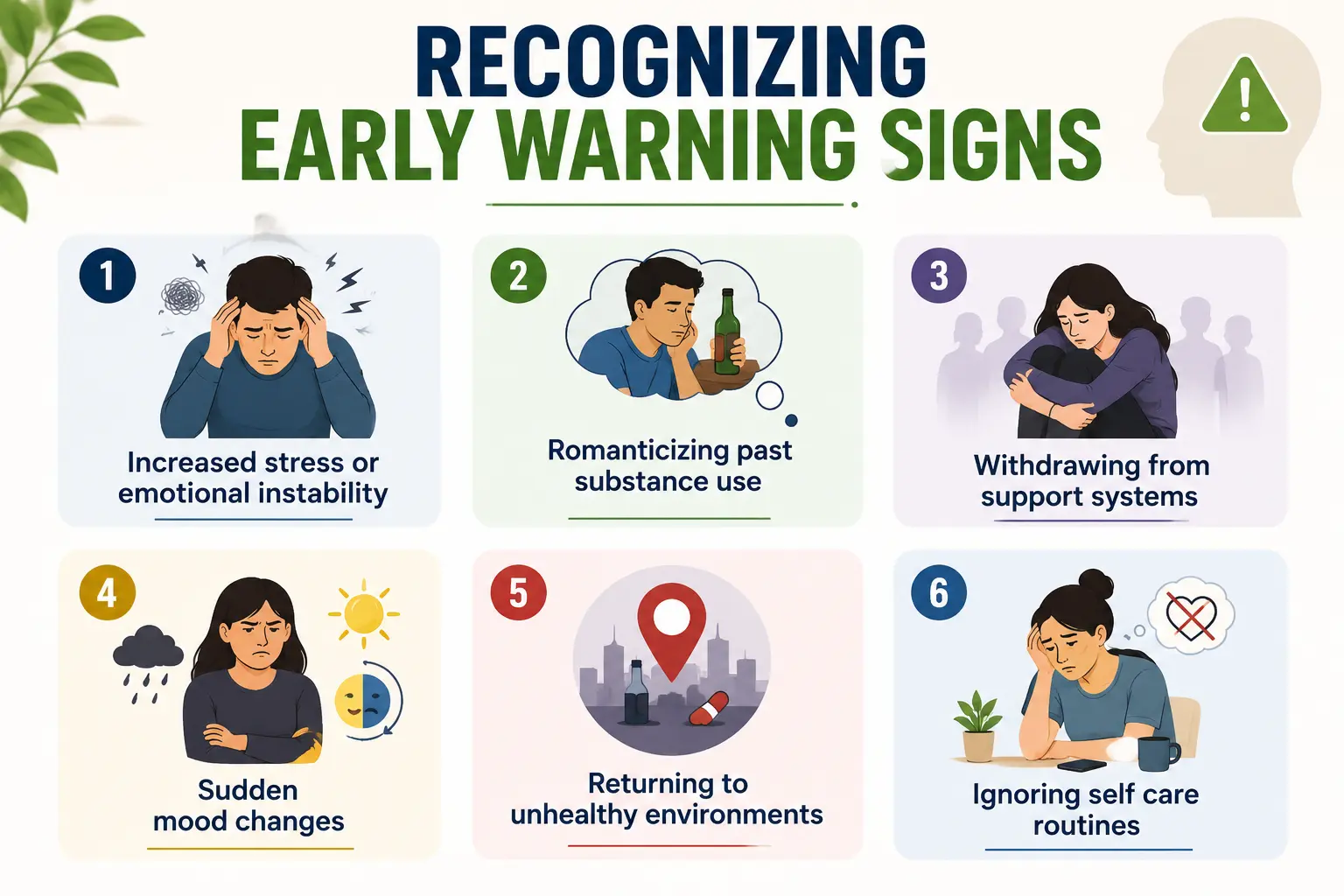
Awareness allows individuals to take action early and prevent relapse.
Healthy Ways to Manage Cravings and Triggers
Managing cravings requires a combination of emotional awareness, lifestyle changes, and professional support.
Develop Healthy Coping Strategies
Replacing substance use with healthier coping mechanisms is essential. Activities such as exercise, meditation, journaling, or creative hobbies can reduce stress and improve emotional balance.
Avoid High Risk Situations
During early recovery, limiting exposure to triggering environments or people can reduce relapse risk.
Build a Strong Support System
Support from family, therapists, support groups, or recovery communities provides encouragement and accountability.
Practice Mindfulness and Relaxation
Mindfulness techniques help individuals stay present and manage emotional reactions without acting impulsively.
Maintain a Structured Routine
Consistent sleep, healthy meals, physical activity, and daily structure support emotional stability and reduce vulnerability to cravings.
Seek Professional Therapy
Therapies such as cognitive behavioral therapy help individuals identify triggers, change thought patterns, and develop healthier responses.
Role of Family in Recovery
Family members play an important role in supporting recovery. A supportive and non judgmental environment helps individuals feel understood and encouraged.
Families can help by:
- Encouraging treatment participation
- Avoiding enabling behaviors
- Promoting healthy routines
- Learning about addiction and recovery
Education and communication strengthen long term recovery efforts.
When Professional Help Is Needed
Professional support is important if cravings become frequent, emotionally overwhelming, or difficult to control. Addiction specialists can provide structured treatment plans and relapse prevention strategies.
Early intervention reduces the likelihood of relapse and supports sustainable recovery.
Final Thoughts
Cravings and addiction triggers are a normal part of the recovery journey, but they do not have to control a person’s future. Understanding what causes cravings and learning how to respond to triggers empowers individuals to make healthier choices and build emotional resilience.
With proper treatment, supportive relationships, and healthy coping strategies, long term recovery is possible. Every step toward understanding triggers is a step toward lasting healing and stability.
About The Author